
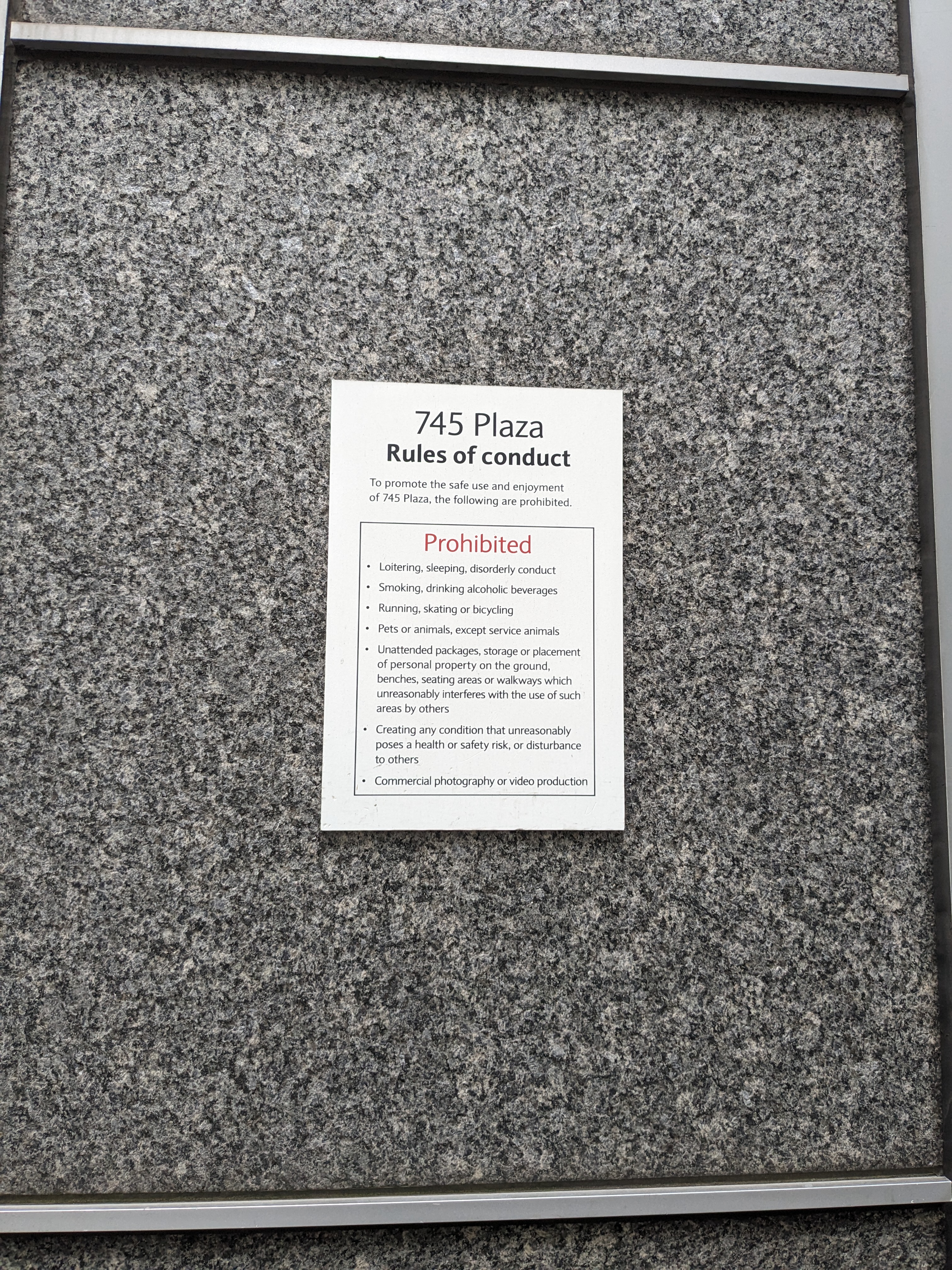
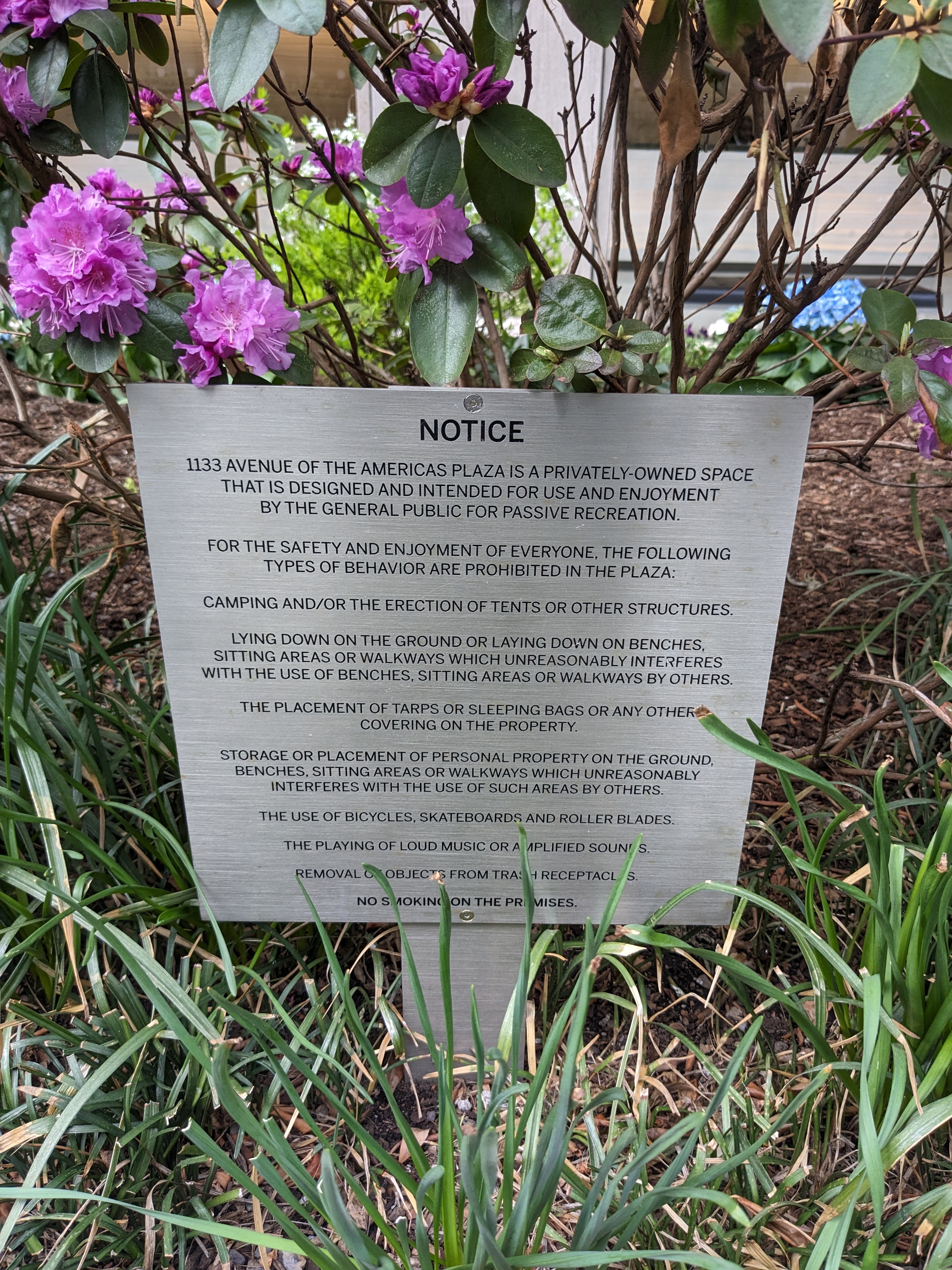
I was sitting in a bar on Amsterdam and 109th when she mentioned POPS.
"Privately Owned Public Space"
I had moved to New York City in August of 2024, had spent my last day in Dublin on my favourite pitch in the city, Michael Mallin Park, by the Michael Mallin flats behind Vicar Street.In 2019, we had organised a marathon football match - “Build Homes” vs “Not Hotels”, played for 7 hours straight - to protest the plans to demolish the football pitch to make way for a new hotel. The developers had promised that the space in front of the hotel would remain public. We knew it would be neither public nor private, but some secret third option that we couldn’t put a name to but had begun to recognise around the city.
I ask her to describe what a Privately Owned Public Space is, if its definition fits the spaces I knew. She sends me the article she is writing:
The plaza falls into an awkward category of public space in New York City: privately owned public space (POPS). Through a development incentive, building owners are granted additional floor area in exchange for creating, maintaining and activating public spaces on their property. Regulation stipulates that the spaces must be open during advertised hours and supply certain amenities. In Midtown Manhattan, the typical floor area bonus is six times the size of the public space provided. By instituting and activating this plaza, the building owners have secured as much as 93,888 square feet of additional floor area. In 2024, the average annual asking rent for office space in Midtown was $82.74 per square foot, representing a potential additional revenue of $7,768,293.12 per year. The Department of Buildings (DOB) has records of complaints regarding the unlawful closure of the site dating back to 2014. Andrew Rudansky, Press Secretary for the DOB, said that after investigating the two most recent complaints, the Department found no violations.
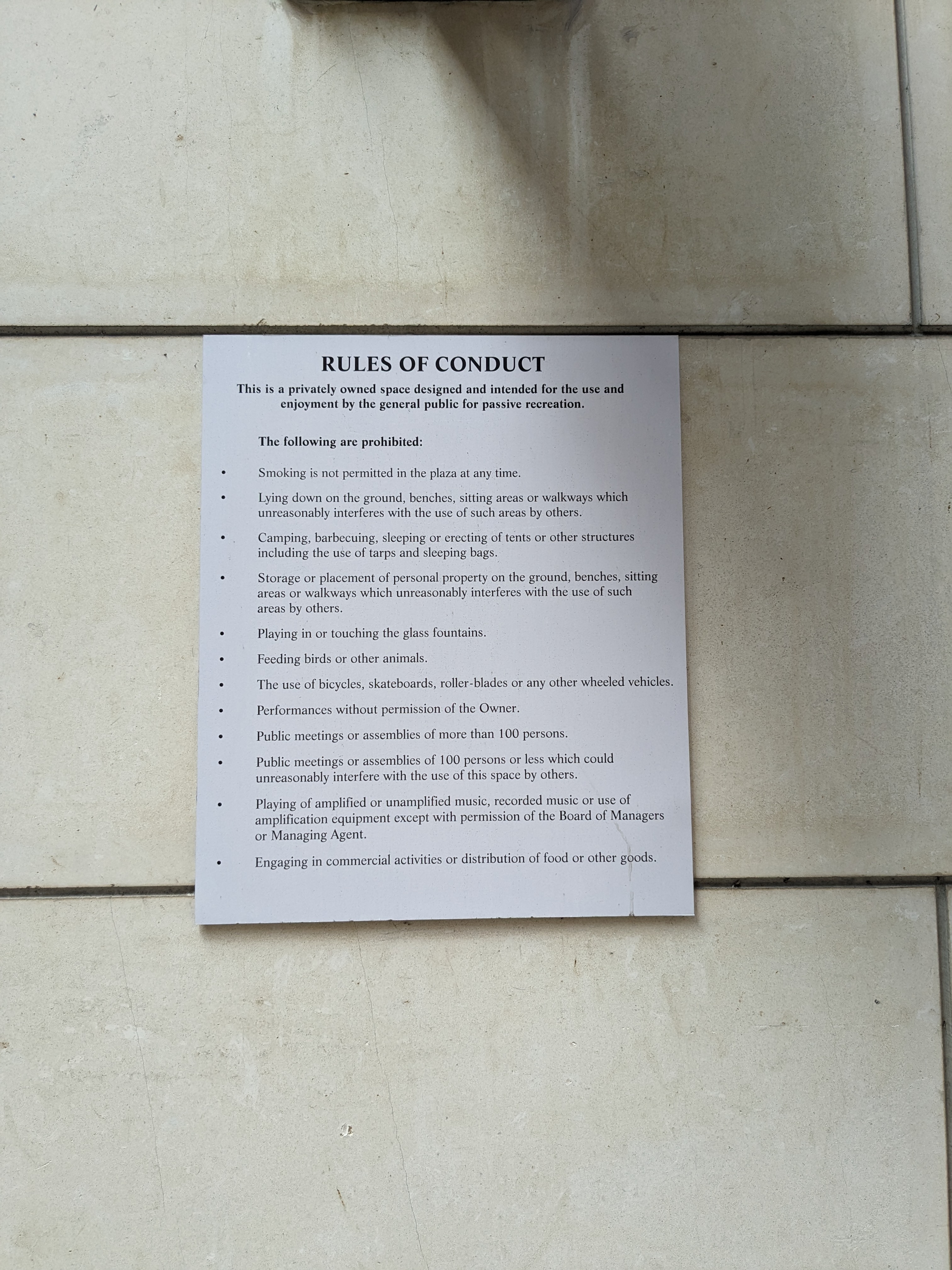
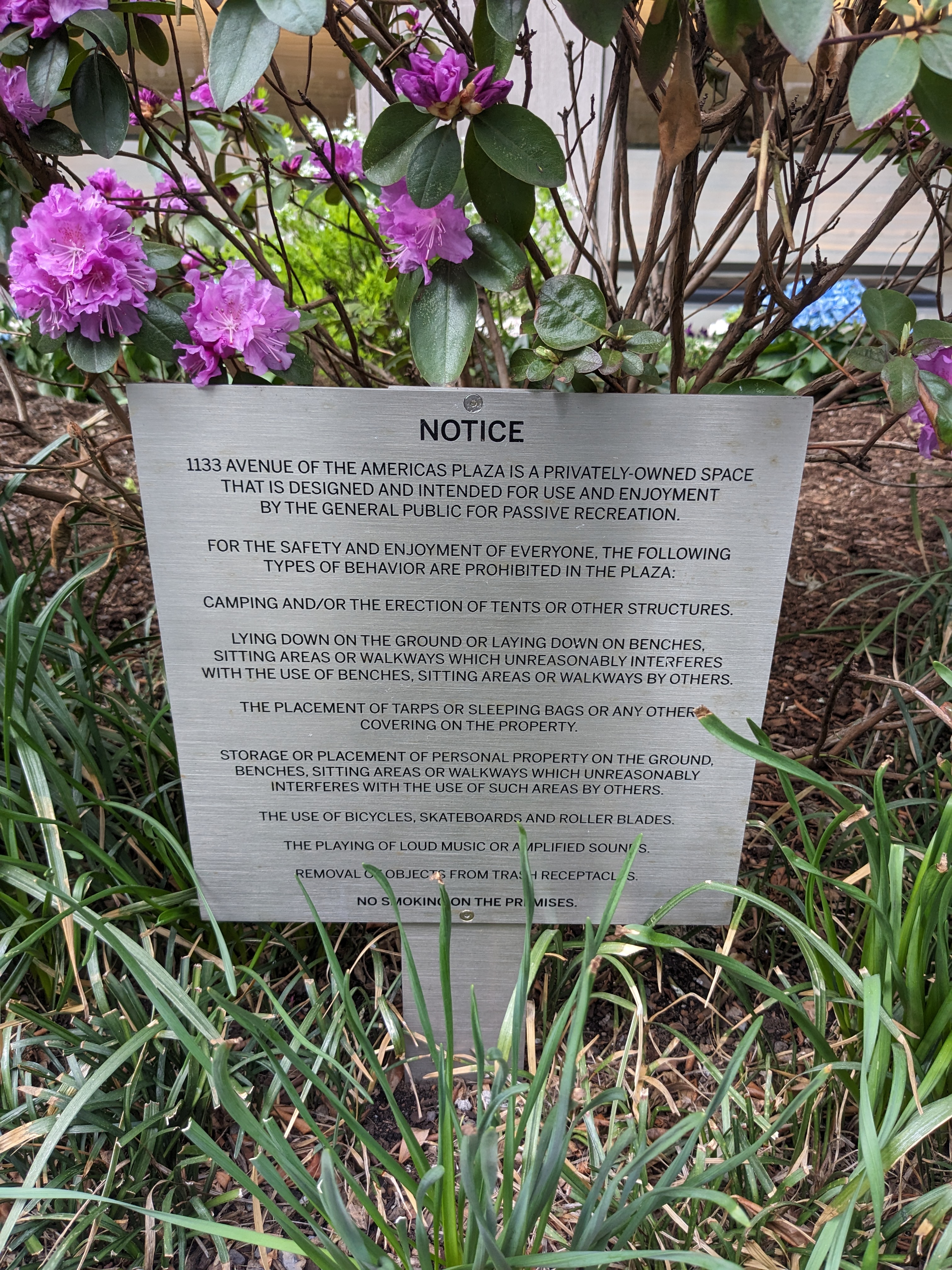
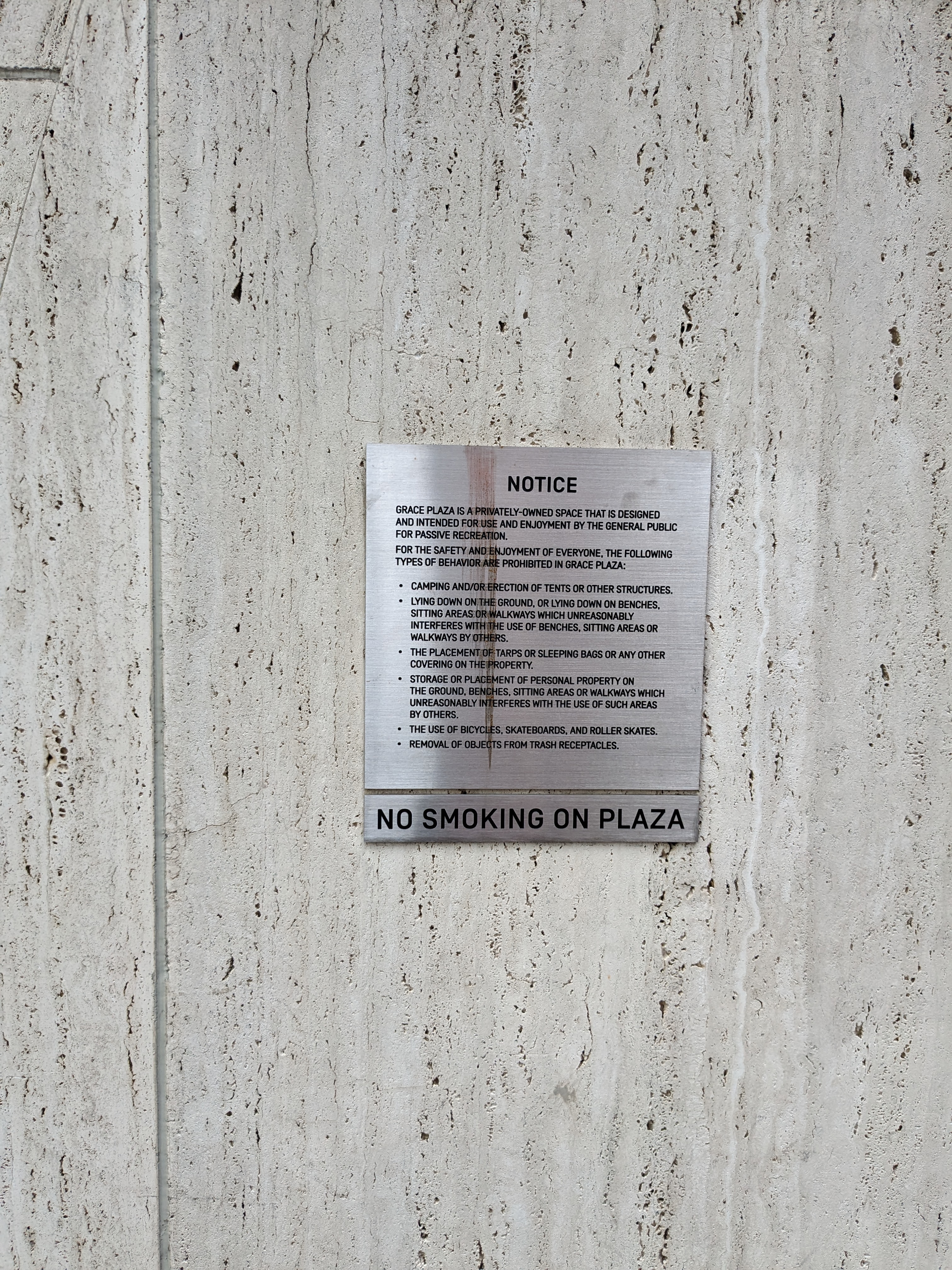
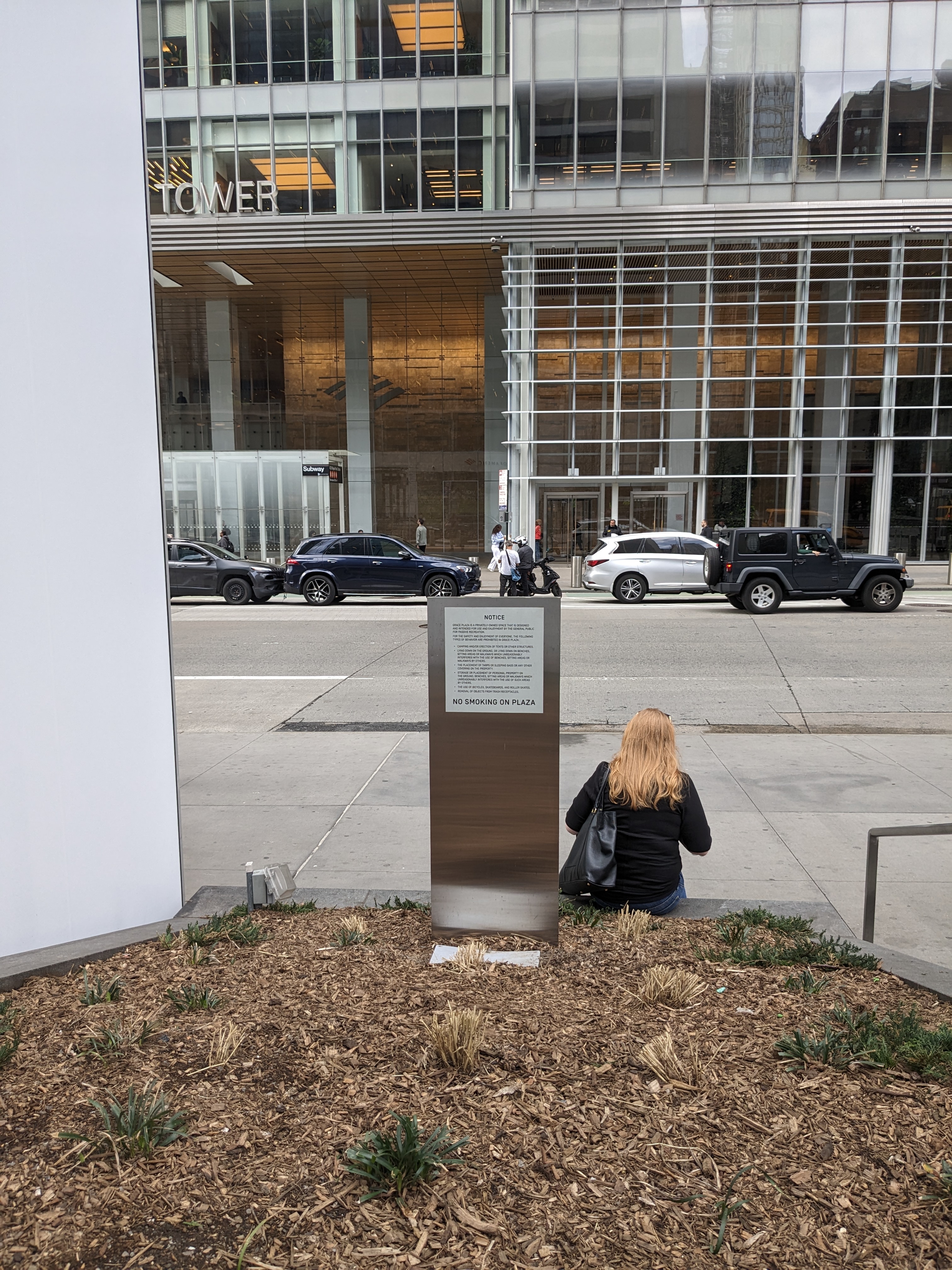
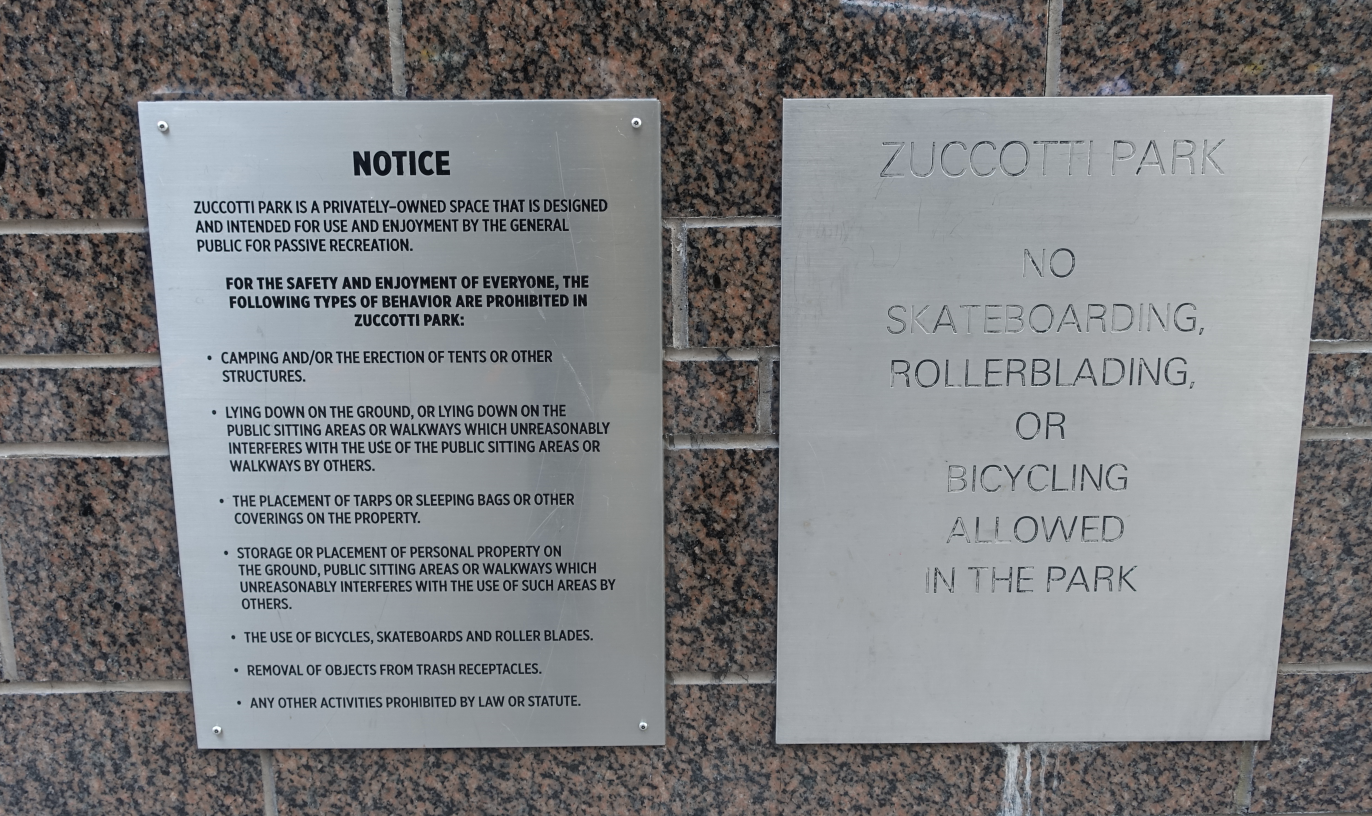
I am immediately transfixed. I cycle around Midtown for hours. My mother visits from Ireland, I bring her on a tour, from 42nd to 61st street, stopping at all the POPS, photographing them. There is a bench in one POPS that says “Private” on it. She feigns sitting down. I start researching them, the rules, why they are there. “No body odour.” “No removal of litter from trash receptacles.” “No roller blading, skateboarding or roller skating.” Newer signs, updated rules, longer lists, “No tents.” “No lying down on the ground” "The placement of tarps is forbidden"
One morning I meet my friend in Times Square, we walk to Worldwide Plaza. It is empty, just like the last two times I have been there. I take photos of the chairs, see if they have moved.
I take a screenshot of an autographic visuallisation of when the rules of the POPS started to change, post-Occupy Wall Street.
One sign I notice on the Upper West Side is explicit in its directive: "passive activities only." The space itself is pleasant—a warm brick courtyard with an elaborate water feature and tiered landscaping, just off Broadway. I spend an hour there and watch multiple iterations of the same person using the plaza: run-club types, clad in expensive leggings and wielding pastries. They are content to quietly sit and replenish their carbohydrate stores after exercise. Anyone more interesting merely passes through, using the space as a thoroughfare between two streets. Exclusion also takes the form of illegal privatization: like the locked plaza off Times Square. In 2000, a Harvard Professor of Urban Studies, Jerold S. Kayden, undertook a comprehensive review of the New York City POPS program. After conducting site visits to almost 500 POPS, he determined that more than 50% had been illegally privatized in some capacity.
I think about illegal privatization, how to visualise that. I continue attending classes in my university, thinking.